Consortium
Statens Serum Institut (SSI)
Statens Serum Institut (SSI) is Denmark’s national public health institute under the Danish Ministry of Health. SSI is responsible for monitoring, preventing and responding to infectious diseases.
The Section for Foodborne Infections (FBI) at SSI serves as the National Reference Laboratory for gastrointestinal bacterial infections. The section is responsible for surveillance of foodborne diseases, advanced laboratory diagnostics, monitoring antimicrobial resistance and outbreak investigations. It also reports data to national authorities as part of a One Health approach.
The FBI section collaborates closely with international partners, including public health institutes, reference laboratories and research organisations. It contributes to European surveillance, supports cross-border outbreak investigations and helps develop and harmonise laboratory methods. In addition, the section takes part in joint research and training activities to strengthen preparedness and response to food- and waterborne diseases.
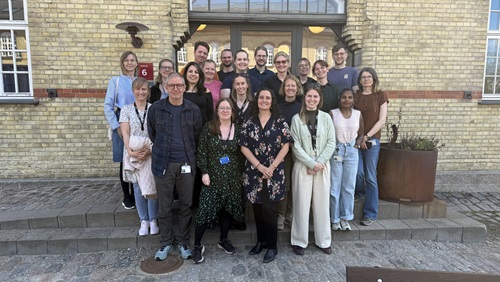
Foodborne infection section at Statens Serum Institute, Denmark
EURL core team at Foodborne infection section at Statens Serum Institute, Denmark:
- Eva Møller Nielsen
Coordinator - Egle Kudirkiene
Project manager: coordination, communication and dissemination - Jeppe Boel
Support to Network laboratories, support for EQAs on AMR - Małgorzata Ligowska-Marzęta
External quality assessments (EQAs) - Anne Sophie Majgaard Uldall
External quality assessments (EQAs), surveys - Katrine Grimstrup Joensen
Outbreak support lead, support for Campylobacter - Kasper Rømer Villumsen
Scientific advice to ECDC, support for STEC - Vera Irene Erickson
Trainings lead, support to Network laboratories - Simon Bo Larsen
Trainings co-lead, support for Listeria - Susanne Schjørring
Support to network laboratories, support for EQAs - Melanie Dichmann Kristensen
Dissemination - Marianne Noer Hjorth
Administrative support
The National Institute for Public Health and the Environment (RIVM)
The National Institute for Public Health and the Environment (RIVM) in the Netherlands is a public health institute under the Dutch Ministry of Health, Welfare and Sport. RIVM stands for a healthy population in a sustainable, safe and healthy environment for current and future generations. Within the RIVM, the Centre for Infectious Diseases Research, Diagnostics and Laboratory Surveillance (IDS) is involved in laboratory surveillance, diagnostic testing, research and advice. As such, the centre plays an important role in the response to infectious diseases. IDS is an (inter)national reference laboratory for a number of pathogens. One of its main tasks is to support the early detection of outbreaks, thereby contributing to both prevention and response.
One of the departments within IDS is the department of bacterial food borne infections. This department is a national reference laboratory for Campylobacter, Listeria monocytogenes, Salmonella, Shiga-toxin producing Escherichia coli, Shigella, Vibrio cholera, and Yersinia enterocolitica.
The department applies its expertise in diagnostics, surveillance, and scientific research to support national patient safety and public health. This work focuses on understanding the nature and occurrence of these pathogens, as well as their resistance mechanisms and transmission routes.

- Maaike van den Beld
Coordinator - Maren Lanzl
External quality assessments lead, scientific advice to ECDC - Linda Visser
Support to Network laboratories, scientific advice to ECDC lead - Ninée Buchholtz
Communication and dissemination, training - Casper Jamin
Training - Roxanne Wolthuis
External quality assessments - Kim van der Zwaluw
Support to Network laboratories - Cagdas Tas
Dissemination and communication
The Istituto Superiore di Sanità (ISS)
The Istituto Superiore di Sanità (ISS) is the foremost Italian authority for research, monitoring and technical‑scientific support in the field of public health. Approximately 1,800 staff members—including scientists, technical professionals and administrative personnel—work every day to protect and improve Public Health.
The Institute operates through a structured network consisting of 6 Departments, 16 National Centres, 2 Reference Centres, 5 technical‑scientific service units, and a Notified Body responsible for evaluating the conformity of medical devices.
In collaboration with the Ministry of Health, regional institutions and the National Health Service (NHS), the ISS contributes to shaping health policies based on robust scientific evidence.
The Department of Food Safety, Nutrition and Veterinary Public Health is dedicated to the prevention and protection of public health by developing, validating and implementing knowledge, tools and strategies aimed at food safety, zoonosis prevention and the promotion of healthy eating patterns.
Within this context, the Unit for Microbiological Food Safety and Foodborne Diseases undertakes scientific and institutional research on food‑related illnesses, with a specific focus on microbiological hazards.
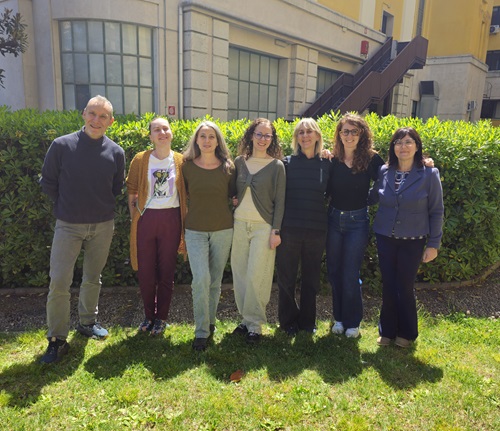
-
Stefano Morabito
ISS Head of Partner Institute EURL-PH-FWDB, scientific advice to ECDC - Rosangela Tozzoli
support to network laboratories lead, scientific advice to ECDC - Valeria Michelacci
support to network laboratories co-lead, EQAs - Paola Chiani
support to network laboratories, EQAs - Federica Gigliucci
support to network laboratories, trainings - Margherita Montalbano Di Filippo
communication and dissemination - Guendalina Fornari Luswergh
communication and dissemination, trainings